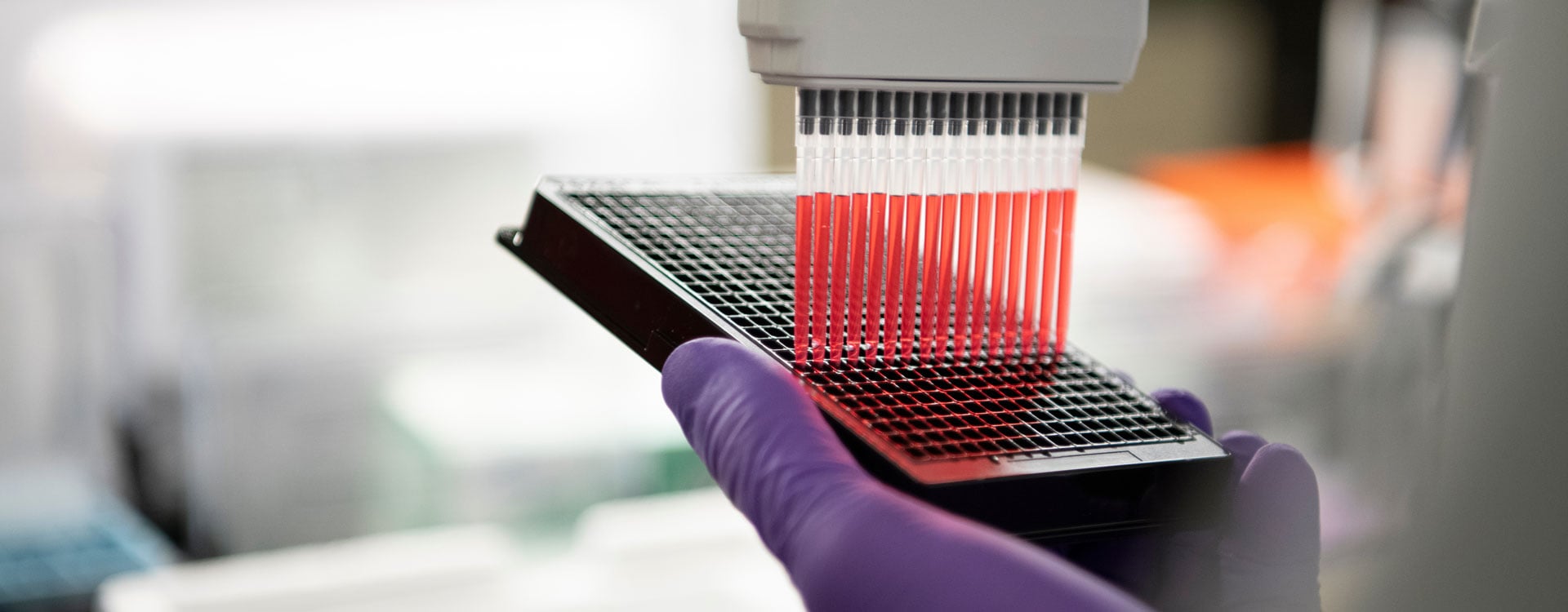
We are proud to offer state-of-the-art environmental laboratory testing services performed by the Aquatic Toxicology Services Laboratory, as well as the Microbiological and Molecular Services Laboratory. Both laboratories are co-located in the San Diego facility and offer unique benefits to customers.

Average years of experience among team leaders
20+
img-laboratory-services-1-v2

Core services

  • Sediment and soil quality investigation and remedial support
  • Stormwater monitoring and testing
  • NPDES permit review and compliance support
  • Harmful Algal Bloom (HAB assessment)
  • Experimental design
  • Investigative and In-situ studies
  • Educational outreach and training
  • Database support: Surface Water Ambient Monitoring Program (SWAMP) and CA Environmental Data Exchange Network (CEDEN)
  • Freshwater and marine bioassessment support
  • Product testing

Aquatic toxicology

  • Toxicity testing: effluent, stormwater, and sediment samples
  • Toxicity Reduction Evaluations (TRE) and Toxicity Identification Evaluations (TIE)
  • Bioaccumulation studies
  • Hazardous waste and product testing
  • Ecological risk assessment

Current services

Membrane filtration and sample archival

Droplet digital polymerase chain reaction (ddPCR) and quantitative polymerase chain reaction (qPCR) analysis of the following microbial source tracking (MST) markers:

  • Human-Specific Markers (HF183, Lachno3, humM2)
  • Animal-Specific Markers (Dog (DG3), Gull (CaT#998))
  • General Fecal Indicators (Enterococcus, E. coli)
  • Viruses (CrAssphage (CPQ_056), Enterovirus, and Norovirus)

Microbiological analyses:

  • Total bacterial counts (TBS)/Heterotrophic plate counts (HPC)
  • IDEXX methods (Total Coliforms, Fecal Coliforms, E. coli, Enterococcus)
  • Membrane Filtration methods (Total Coliforms, Fecal Coliforms)

Viable copy number (vddPCR/vqPCR) of difficult to culture microbes: (HF183, Lachno3, Other non-culturable/difficult to culture fecal indicator bacteria)

CA Environmental Data Exchange Network (CEDEN) electronic document delivery for molecular and microbiological analyses

Future capabilities

Additional animal specific markers (avian, bovine, etc.) and custom markers

img-laboratory-services-2-v2
img-laboratory-services-3
img-laboratory-services
We’re not just running numbers for compliance—we’re helping clients validate new ideas and improve environmental outcomes.

prf-website-red-carlson-steve
Aquatic Toxicology Laboratory Director
United States
prf-website-red-gabriel-alexander
Aquatic Toxicology Laboratory Manager
United States
prf-website-red-suzuki-josh
Joshua Suzuki
Aquatic Toxicology Laboratory Scientist
United States
prf-website-red-kellogg-matt
Matt Kellogg
Aquatic Toxicology Laboratory Scientist
United States
prf-website-red-khan-nurul
Microbiological & Molecular Laboratory Director
United States
prf-website-red-trinh-amanda
Amanda Trinh
Microbiological & Molecular Laboratory Manager
United States
prf-website-red-tierney-kim
Tierney Kim
Microbiological & Molecular Scientist
United States
prf-website-red-arkelyan-meredith
Microbiological & Molecular Senior Consultant
United States
Show more Show less
img-laboratory-services-faq-2

What makes your lab different from larger facilities?

Since our lab is small, we are performing tests on fewer samples and projects compared to the larger labs. This allows our staff to spend more time on each individual sample and project, which leads to fewer errors and mistakes. It produces a better outcome and more successful testing results.

What types of organisms do you test in your aquatic toxicology lab?

We test freshwater and marine species including fathead minnows, water fleas, green algae, topsmelt, sea urchins, and kelp. Organisms are tested in their most sensitive life stages to conservatively assess environmental risk.

Can your aquatic toxicology lab support product validation or research projects?

Yes. We’ve helped clients validate new remediation products through toxicity testing. Our lab is equipped to support innovative projects that require scientific rigor and regulatory insight.

What is the turnaround time for results from your aquatic toxicology lab? Can results be expedited?

For routine monitoring programs, tests are completed within 7 business days and results are reported within 3 weeks after test completion. Tests can be run outside of normal work hours and over the weekend if requested. Yes, they can be expedited at an additional cost.

How do microbiological and molecular analyses improve public health decisions?

Fecal indicator bacteria (coliforms, E. coli, and Enterococcus) analysis is regularly used to monitor water quality health and recognize human health hazards. Additionally, the use of microbial source tracking (MST) markers such as HF183, DG3, CaT#998, and other markers provide insightful traceability of specific types of contamination found. Our adaptable services have provided guidance for public health, recreational, and environmental decisions.

Can your microbiological and molecular lab run ddPCR/qPCR on any markers not listed in your current services?

Yes, custom markers are available for design and validation by request. Please contact Dr. Nurul Khan regarding specific bacterial and viral markers.

What is the turnaround time for results from your microbiological and molecular lab? Can the results be expedited?

Turnaround time is 10 business days for ddPCR/qPCR and 3 business days for FIB analysis. Yes, they can be expedited at an additional cost.


img-homepage-careers